
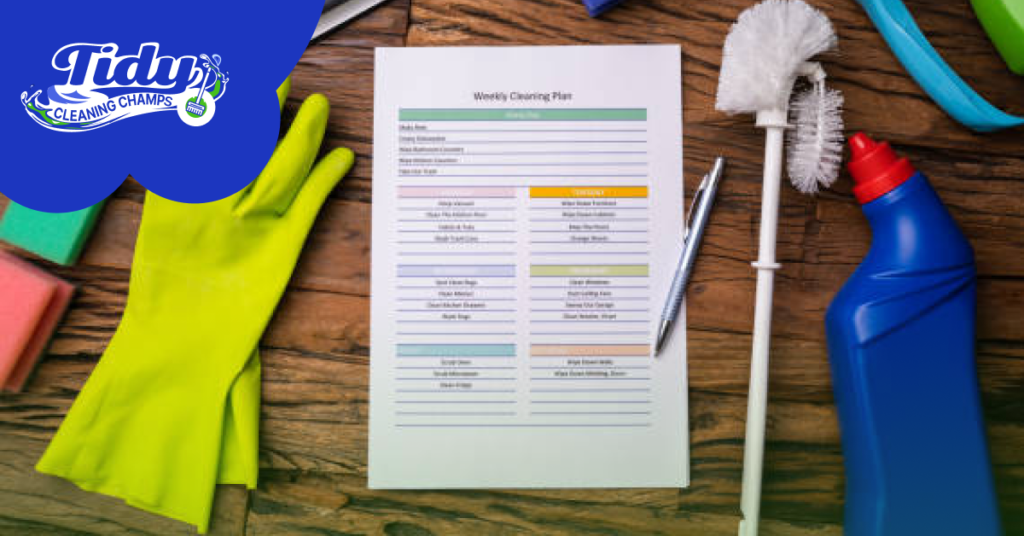
Maintaining a home isn’t just about “tidying up”; it’s about creating a sanitized, stress-free environment. For the modern homeowner, the challenge isn’t knowing that cleaning is necessary, but knowing how to do it with professional efficiency. This standard cleaning checklist makes it easier to understand which areas and tasks should be included in a routine home cleaning.
Whether you are tackling the chores yourself or auditing a professional service, this standard cleaning checklist provides a practical guide for maintaining a clean, comfortable, and presentable home.
What Is Included in a Standard Cleaning Service?
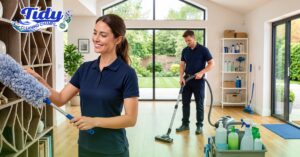
A standard cleaning service includes essential maintenance tasks that help keep a home healthy and presentable. The main tasks include dusting surfaces, vacuuming and mopping floors, cleaning kitchens and bathrooms, sanitizing high-touch areas when needed, and emptying trash.
Unlike a deep cleaning service, a standard cleaning service generally focuses on routine maintenance and the visible layers of the home. Following a consistent standard cleaning checklist can help prevent the buildup of dust, dirt, grime, and other unwanted debris.
According to the CDC’s guidance on cleaning and disinfecting the home, regular cleaning helps remove germs, dirt, and impurities from household surfaces. The CDC also recommends cleaning surfaces before sanitizing or disinfecting them when those additional steps are needed.
The Tidy Champs Room-by-Room Standard Cleaning Checklist
1. The Kitchen: Sanitization Over Surface-Wiping
The kitchen is one of the highest-traffic areas of a home and requires careful cleaning, particularly around food preparation surfaces. A good standard cleaning checklist should cover the following kitchen areas:
- Countertops & Backsplashes: Clear items from the surfaces and wipe them down with a suitable cleaner.
- Appliance Exteriors: Wipe the exterior surfaces of the refrigerator, oven, and dishwasher. Don’t forget the top of the refrigerator.
- Microwave: Clean the interior and exterior, including the turntable.
- Sinks & Fixtures: Scrub the basin and clean the faucet for a streak-free finish.
- Floors: Sweep first, then damp-mop using a suitable floor-cleaning solution.
Cleaning products should always be selected according to the surface and product instructions. For additional household cleaning guidance, homeowners can refer to the CDC’s cleaning and disinfecting recommendations.
2. Bathrooms: The Hygiene Protocol
Bathrooms require regular attention because moisture, soap residue, and mineral deposits can quickly build up. A complete standard cleaning checklist should include the following bathroom tasks:
- Toilets: Sanitize and clean the bowl, seat, exterior, base, and the often-ignored area behind the tank.
- Showers & Tubs: Scrub tiles and fiberglass surfaces to remove soap scum and buildup.
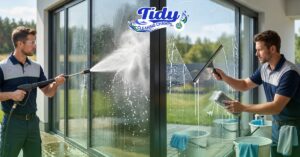
- Mirrors & Glass: Clean mirrors and glass surfaces to achieve a streak-free finish.
- Vanity & Sink: Clear unnecessary items and clean the countertop, vanity, and sink area.
The appropriate cleaning product should always be used for each surface. Cleaning and disinfecting products should also be used according to their labels and safety instructions.
3. Living Areas & Bedrooms: Dust Management
Living rooms and bedrooms require consistent dust management to maintain a comfortable and presentable environment. This part of the standard cleaning checklist focuses on surfaces, upholstery, high-touch areas, and floors.
- The Top-Down Rule: Dust from higher surfaces, such as ceiling fans and fixtures, down toward lower surfaces and baseboards.
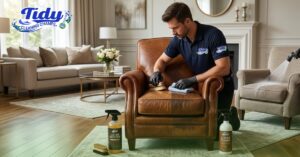
- Upholstery: Vacuum sofa cushions and tidy throw pillows.
- High-Touch Surfaces: Clean frequently touched areas such as light switches, doorknobs, and remote controls.
- Floors: Vacuum carpets thoroughly and use an appropriate cleaning method for wood and other hard flooring.
The CDC recommends regularly cleaning frequently touched surfaces and using products that are appropriate for the specific surface being cleaned.
Pro Strategy: The Left-to-Right Efficiency Secret
Professional cleaners at Tidy Cleaning Champs don’t randomly move around a room. A systematic approach can make a standard cleaning checklist easier to follow and help prevent missed areas.
The team can use a simple circular method:
- Enter a room and choose a starting point, usually near the door.
- Work around the perimeter in one direction, such as left-to-right.
- Clean from top-to-bottom as you move around the room.
- Complete each area before moving to the next one.
Why Does This Cleaning Method Work?
A consistent cleaning pattern makes it easier to remember which surfaces have already been cleaned. It can also reduce unnecessary backtracking and help create a more organized workflow.
Following the same pattern each time is especially useful when using a standard cleaning checklist, because each room can be cleaned according to the same basic process.
Standard Clean vs. Deep Clean: When to Upgrade?
A standard clean is generally designed for routine maintenance, such as weekly or bi-weekly cleaning. A standard cleaning checklist focuses on the regular tasks needed to keep a home clean and presentable.
However, you may want to consider a deep clean when:
- You are moving into or out of a home.
- It has been a long time since your last professional cleaning.
- You need areas such as baseboards, interior windows, or appliance interiors cleaned.
- Certain areas have accumulated heavy dirt, grime, or buildup.
- You want more detailed cleaning beyond regular maintenance.
The main difference is the level of detail. Standard cleaning focuses on routine upkeep, while deep cleaning addresses areas that may not be included in every regular cleaning visit.
Confused about which service you need? Check out our [Deep Cleaning vs. Standard Cleaning Comparison Guide].
How Often Should You Follow a Standard Cleaning Checklist?
A standard cleaning checklist can be used weekly, bi-weekly, or according to the specific needs of the household.
Homes with children, pets, frequent visitors, or higher levels of daily activity may require more frequent cleaning. Other homes may be comfortable with a bi-weekly schedule.
The goal is to maintain a consistent cleaning routine rather than waiting until dust, dirt, and grime have accumulated significantly.
Regular cleaning can also help keep frequently touched surfaces maintained. The CDC recommends cleaning high-touch surfaces regularly and cleaning other surfaces when they are visibly dirty or as needed.
What Tools Are Best for a Standard Home Clean?
Having the right equipment makes it easier to complete a standard cleaning checklist efficiently. Commonly useful cleaning tools include:
- Microfiber cleaning cloths
- A quality vacuum cleaner
- A flat mop system
- Appropriate surface cleaners
- Glass cleaner
- Bathroom cleaning products
- Kitchen-safe cleaning products
- Trash bags and disposable gloves where appropriate
Instead of using one product everywhere, select cleaning products according to the surface and cleaning task. This helps protect surfaces while achieving better results.
Homeowners should also follow product labels carefully, particularly when using disinfectants or stronger cleaning chemicals. The CDC recommends following product directions and not mixing cleaning or disinfecting chemicals.
For more information about safe household cleaning and disinfecting practices, see the CDC’s official home cleaning guidance.
Frequently Asked Questions About a Standard Cleaning Checklist
How Often Should I Use a Standard Cleaning Checklist?
For routine home maintenance, a standard cleaning checklist can be followed weekly or bi-weekly, depending on the home’s size, number of occupants, pets, and daily activity.
Regular cleaning helps prevent dust, dirt, and grime from building up and makes larger cleaning tasks easier to manage.
What Tools Are Best for a Standard Home Clean?
Microfiber cloths, a quality vacuum cleaner, and a flat mop system are useful tools for completing routine household cleaning.
A vacuum can help remove dust and debris from carpets and rugs, while microfiber cloths can be used on many hard surfaces. Always choose tools and products appropriate for the surface being cleaned.
Do I Need to Be Home During a Professional Cleaning?
Many clients prefer to provide a key, access code, or another approved method of entry when using a professional cleaning service.
Professional services such as Tidy Cleaning Champs can allow homeowners to reclaim their time while trained cleaners handle the routine cleaning work.
Can I Use the Same Cleaner for the Kitchen and Bathroom?
Not necessarily. Different surfaces and cleaning tasks may require different products.
Kitchen surfaces, particularly food-preparation areas, should be cleaned with products appropriate for those surfaces. Bathroom cleaners may be designed to deal with soap scum, mineral deposits, and other bathroom-specific buildup.
Cleaning tools should also be changed or properly cleaned between areas to help reduce the risk of cross-contamination.
What Is the Difference Between Cleaning, Sanitizing, and Disinfecting?
Cleaning removes dirt, germs, and impurities from surfaces. Sanitizing reduces germs to levels considered safe, while disinfecting uses appropriate chemicals to kill germs remaining on surfaces.
The CDC recommends cleaning surfaces before sanitizing or disinfecting them when those additional steps are necessary. More details are available in the CDC’s cleaning and disinfecting guidance.
Reclaim Your Time With Tidy Cleaning Champs
A clean home is a luxury of time, a luxury many busy professionals simply don’t have. While this standard cleaning checklist provides the roadmap, completing every task consistently can take hours of valuable weekend time.
Why DIY when you can hire a Champ?
At Tidy Cleaning Champs, the goal isn’t simply to follow a list. The team applies a structured cleaning system to help keep homes clean, comfortable, and presentable. Professional cleaning can be especially useful for busy homeowners who want consistent maintenance without spending their free time completing every household chore.
A standard cleaning checklist helps homeowners understand what routine cleaning should cover, while a professional cleaning service can handle the labor and provide a consistent cleaning routine.
Get an Instant Quote & Book Online
Tidy Cleaning Champs can help homeowners maintain their homes with a professional approach to routine cleaning.
A consistent cleaning routine can make everyday home maintenance easier, and the right standard cleaning checklist ensures important areas are not overlooked.