


Picture a sunny Saturday morning. Your windows are streaked with dust, your driveway looks tired, and a pressure washer is sitting in the garage. It is tempting to grab the wand and blast everything clean, but pressure washing windows can turn a quick weekend chore into an expensive repair bill. Glass looks tough, yet the seals, frames, and screens around it are far more delicate than most people realize.
So what is the real difference between pressure washing and standard window cleaning? In short, pressure washing uses forceful water to blast dirt off hard outdoor surfaces, while standard window cleaning uses gentle tools, mild solutions, and a squeegee to leave glass clear and spotless. This guide explains how each method works, where each one belongs, what you should expect to pay, and how to protect your home along the way.
What Is the Difference Between Pressure Washing and Standard Window Cleaning?
The main difference is force versus finesse. Pressure washing relies on a motor-driven pump that sends water through a narrow nozzle, often at 2,000 to 4,000 PSI, to blast grime off tough materials. Standard window cleaning relies on gentle agitation, a mild cleaning solution, and careful removal of water so the glass dries clear. One method is built for concrete, and the other is built for glass.
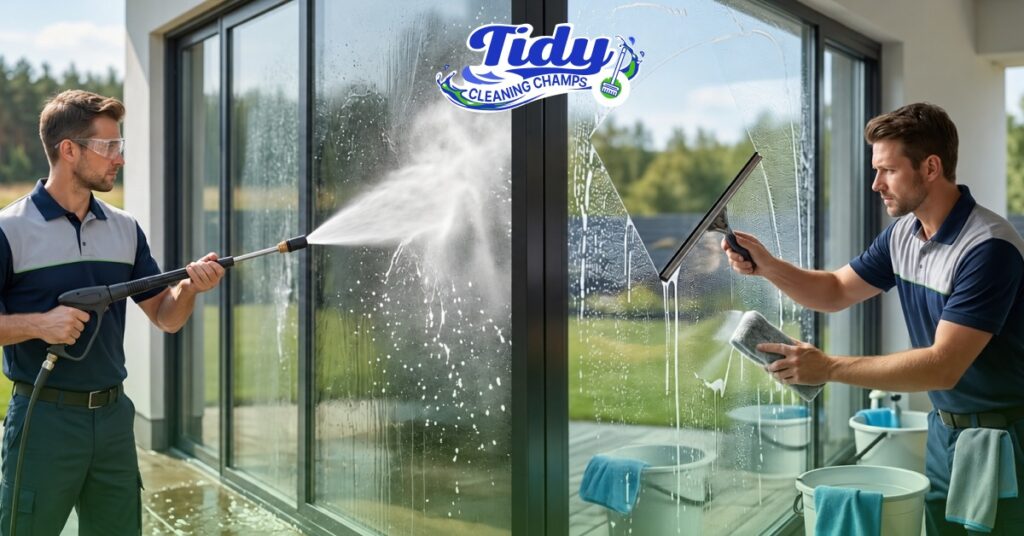
Because the goals are different, the tools are different too. A pressure washer uses a pump, a reinforced hose, and interchangeable nozzles that control the spray angle. A window cleaner uses a scrubber, a squeegee, microfiber towels, and sometimes a water-fed pole. These tools are designed to protect delicate surfaces rather than strip them.
How Standard Window Cleaning Works
Standard window cleaning is a precision process. A technician wets the glass with a soapy solution, loosens dirt with a scrubber, and pulls the water away with a squeegee in a controlled pattern. Frames, sills, and tracks are wiped by hand so dirty water does not run back onto clean glass. The result is a streak-free finish that improves natural light and curb appeal.
Many professionals also use water-fed pole systems with reverse osmosis or deionized water. Purified water contains almost no dissolved minerals, so it dries without leaving spots. This approach is especially helpful for tall windows, skylights, and homes with hard water stains.
How Pressure Washing Works
Pressure washing is a surface cleaning method for durable materials such as concrete driveways, brick patios, and sidewalks. The strong water jet blasts away mud, oil, moss, and loose paint in a matter of minutes. It works through impact rather than detail. That impact is exactly why it becomes risky anywhere near glass.
Is Pressure Washing Windows Safe for Your Glass, Seals, and Frames?
When it comes to pressure washing windows, the safe answer is that it is rarely a good idea for homes and most commercial buildings. Glass can crack under strong force, especially older or thin panes, and the parts around the glass are even more vulnerable. Most window damage happens quietly, and homeowners often notice it weeks later.
Modern double-pane windows are insulated glass units with a sealed air space between two sheets of glass. A powerful spray can break down that seal, letting moisture creep in and creating the cloudy, foggy look that is expensive to fix. Once a seal fails, the insulating value drops, and the whole unit may need replacement.
Water intrusion is another serious concern. High pressure can push water past weep holes, caulking, and window tracks and into the wall cavity, where it may feed mold and rot. Screens can tear, vinyl frames can warp, and painted trim can peel. Because this damage is hidden behind the siding, it often costs far more than the cleaning itself.
Pressure also fails at the one thing windows need most, which is a clear finish. Spraying water alone leaves mineral deposits, film, and streaks behind. You would still need a proper hand cleaning afterward, so the supposed shortcut simply creates extra work.
Pressure Washing vs. Window Cleaning: Side-by-Side Comparison
The table below sums up the main differences so you can compare both methods at a glance.
| Factor | Pressure Washing | Standard Window Cleaning |
| Water force | High, often 2,000 to 4,000 PSI | Gentle, hand tools or low-pressure rinse |
| Best surfaces | Concrete, brick, stone, sturdy decks | Glass, frames, sills, screens |
| Main tools | Pump, hose, spray nozzles | Squeegee, scrubber, microfiber, water-fed pole |
| Finish | Removes heavy dirt, not streak-free | Clear, spot-free, streak-free |
| Risk to windows | High, including seal and screen damage | Very low when done correctly |
As the comparison shows, the two services are not rivals. They simply solve different problems, and each one performs best on its own type of surface.
When Does Pressure Washing Make Sense Around Your Home?
Pressure washing is the right choice for hard, durable surfaces such as concrete, stone, brick, and sturdy outdoor structures. Driveways, walkways, and patios respond well because the material can handle the force. Cleaning these areas also improves safety by removing slippery algae and oil stains, and it gives your property an instant lift.
For siding, roofs, and the walls surrounding your windows, a gentler method called soft washing is usually the better option. Soft washing applies a mild cleaning solution at low pressure to kill algae, mildew, and mold at the source. It protects vinyl siding, painted surfaces, and window frames, and the results often last longer than a high-pressure rinse.
If you plan to clean both, the order matters. Pressure wash the driveway and other exterior surfaces first, because the spray can splash dirt and debris onto the glass. Then finish with window cleaning so your windows stay spotless. This simple sequence saves time and keeps you from cleaning the same panes twice.
Window Cleaning Cost: What Do Homeowners Typically Pay?
Window cleaning cost in the United States usually runs between $8 and $20 per window for interior and exterior service, or roughly $150 to $400 for a typical home. Some companies charge by the plane at about $4 to $8, and many set a minimum visit fee to cover travel and equipment. Independent pricing resources, including the This Old House window cleaning cost guide, report similar ranges.
What Affects the Final Price
Several factors shape your quote. Window count and size matter most, followed by height, because upper-story windows require ladders or water-fed poles and often add $3 to $5 per level. Extra services such as screen cleaning, track detailing, and hard water stain removal also raise the total. Heavy buildup from construction dust or years of neglect can add time and cost as well.
Compared with repairing a failed window seal, professional cleaning is a modest investment. A single replaced insulated glass unit can cost many times more than a full-house cleaning visit. Choosing the right method protects both your budget and your windows.
Every home is different, so exact pricing depends on your layout and window types. If you want a clear estimate based on your window count and home height, Contact us and our team will walk you through the options. A quick conversation can save you from surprise charges later.
Why Professional Window Cleaning Delivers Better Results
Professionals bring trained hands, commercial-grade tools, and proven methods to every job. They know how to handle low-E coatings, textured glass, and divided-light windows without scratching or leaving residue. They also work safely at height, which matters because ladder falls are a common cause of home injuries.
A trusted local provider such as Tidy Cleaning Champs combines this expertise with careful preparation, including protecting sills and checking screens before work begins. The team uses squeegees, microfiber cloths, and purified water where needed to leave a spot-free finish. This attention to detail keeps your glass clear, your frames protected, and your home looking sharp all year.
Routine cleaning also extends the life of your windows. Removing dirt, pollen, bird droppings, and mineral deposits regularly prevents etching and permanent hard water marks on the glass. Most homes benefit from professional service two to four times a year, depending on weather, nearby trees, and traffic.
Frequently Asked Questions
Can you pressure wash windows?
Technically yes, but it is not recommended for most windows. High pressure can crack glass, damage seals, tear screens, and push water into your walls. A low-pressure rinse or professional window cleaning is a much safer choice.
Is pressure washing or window cleaning better for windows?
Window cleaning is better for windows. It uses gentle tools and controlled methods that remove dirt without harming seals or frames. Pressure washing is better saved for driveways, patios, and other hard surfaces.
What PSI is safe for cleaning windows?
Garden hose pressure, which is roughly 40 to 60 PSI, is safe for rinsing windows. Pressure washers commonly run well above 1,500 PSI, which is far more force than most window assemblies are designed to handle. When in doubt, choose a hand cleaning method.
How much does window cleaning cost?
Most homeowners pay about $8 to $20 per window, or $150 to $400 for a whole house. The final price depends on the number of windows, the height of your home, and add-ons like screens, tracks, and hard water stain removal. Many companies also set a minimum service fee.
Should you pressure wash the house before cleaning windows?
Yes, you should pressure wash driveways and other hard exterior surfaces first. The spray can splash dirt onto the glass, so cleaning the windows last gives the best result. For siding and the walls around your windows, soft washing is the safer method.
Conclusion
The difference comes down to purpose. Pressure washing is built for tough exterior surfaces, while standard window cleaning is built to protect and perfect glass. Pressure washing windows may seem faster, but the risk to seals, frames, and screens makes it a poor choice for most properties. At Tidy Cleaning Champs, we provide professional window cleaning that delivers a clear, streak-free finish without the risk. Reach out today and see how much brighter your home can look.