

A renovated commercial space can look completely new while its furniture tells a very different story. Fine construction dust can settle deep into office chairs, sofas, reception seating, and conference room furniture long after contractors have left. That’s why commercial furniture cleaning should be treated as an essential part of the final cleaning process, not an optional extra.
Renovation work creates drywall particles, paint residue, adhesive traces, and sawdust that move throughout a building and settle where routine dusting can’t reach. Post renovation cleaning covers floors, walls, and windows, but that doesn’t always mean furniture gets properly cleaned. Upholstered furniture holds fine particles inside its fibers, while hard surfaces collect residue around edges, joints, and handles that receive little attention during a standard cleanup.
This guide explains why commercial furniture cleaning matters after renovation, what the process involves, and how to build it into a complete post-renovation plan.
Why Does Commercial Furniture Need Cleaning After a Renovation?
Construction dust can settle on and inside furniture even when it was covered during the project. Fine particles travel through doorways, ventilation systems, and foot traffic, settling on desks, chairs, sofas, and reception seating throughout the building, not just in the immediate renovation zone.
The problem is most noticeable on fabric and porous surfaces. Upholstery traps fine dust between fibers and underneath cushions, so simply wiping the visible surface leaves a deeper layer behind. Drywall dust, paint overspray, and adhesive residue can also cause discoloration if left too long. A property can look clean from a distance while still needing detailed commercial furniture cleaning, which matters most in reception areas where visitors interact directly with upholstered seating.
What Does Commercial Furniture Cleaning Involve?
Commercial furniture cleaning is the professional process of inspecting, vacuuming, treating, and cleaning furniture used in business environments. The right approach depends on the material.
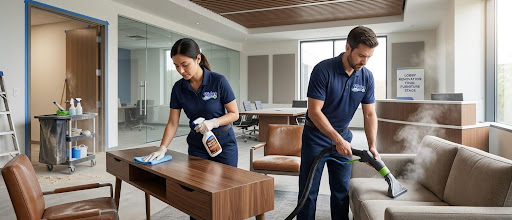
Upholstered furniture typically starts with inspection and dry soil removal vacuuming before applying any moisture, since moisture on dry dust can turn it into a residue that’s harder to remove. From there, spot treatment, low-moisture cleaning, or hot water extraction may follow, depending on the fabric and contamination.
Hard furniture desks, tables, cabinets, shelving needs detailed dust removal followed by appropriate surface cleaning, paying particular attention to joints, handles, corners, and undersides where renovation dust collects.
Leather furniture needs specialized care. It shouldn’t be treated like fabric upholstery, excess moisture, unsuitable chemicals, or aggressive scrubbing can damage the finish, so the type and condition of the leather should guide the cleaning solution used.
How Is This Different From Regular Office Cleaning?
Regular office cleaning maintains an already functional space dusting, vacuuming, mopping, trash removal. Post-renovation cleaning recovers a property after construction, addressing fine dust across walls, ceilings, flooring, fixtures, and furniture.
Furniture sits between these two categories. It’s part of the everyday commercial environment, but it often needs a more specialized process than floors or hard surfaces because its materials are more sensitive. A proper post-renovation plan shouldn’t end once the floors are vacuumed; commercial furniture cleaning, along with other soft surfaces, needs its own assessment before the space is ready for normal business.
When Should Furniture Be Cleaned After Renovation?
Furniture should generally be cleaned after the major dusty work is finished but before the business resumes normal operations. Cleaning too early risks repeat work, if sanding, painting, or drilling is still happening, newly cleaned furniture can get dirty again.
A practical sequence: complete the major renovation work, remove construction debris, perform initial dust removal, complete detailed post-renovation cleaning, then carry out final furniture cleaning and inspection. Timing also depends on material upholstery may need drying time after a wet cleaning process, so businesses should schedule cleaning with enough buffer before employees or customers return. After-hours or weekend cleaning is often the easiest way to avoid disrupting operations.
What Types of Furniture Commonly Need Commercial Furniture Cleaning?
Office chairs are frequently overlooked; fabric chairs benefit from detailed vacuuming and upholstery cleaning, while mesh chairs need careful attention since fine particles trap easily in the weave.
Reception seating creates an immediate impression on visitors, so sofas and lounge chairs deserve inspection and material-appropriate cleaning before the space reopens.
Conference room furniture, chairs, large tables, credenzas can collect dust beneath tables and around chair legs that’s easy to miss during a general cleanup.
Break room and retail furniture face additional challenges since they’re already exposed to food residue, grease, or heavy customer traffic, meaning construction dust mixes with pre-existing soil.
Medical and professional facility furniture often requires methods that account for the facility’s hygiene standards on top of standard commercial furniture cleaning practices.
Can Construction Dust Damage Furniture?
Yes, if it isn’t removed correctly, though the risk depends on material and contamination type. Some construction materials contain abrasive particles that can create fine scratches if rubbed across a polished surface instead of removed carefully. Paint and adhesive residue can cause further problems if scraped or dissolved with an unsuitable product. Fabric furniture is especially vulnerable, since dust embedded in fibers can turn into residue if moisture is applied without proper preparation. The safest approach is identifying the material first, then choosing equipment and products suited to it.
The Right Commercial Furniture Cleaning Process for Removing Renovation Dust
Start with dry removal, not water or chemicals. Loose dust should be vacuumed carefully across cushions, seams, edges, and backs before any moisture is introduced. Applying water to dry construction dust can turn it into a harder-to-remove paste. A HEPA-filtered vacuum is particularly useful here, since it’s designed to capture a high proportion of fine particles.
After dry soil removal, the surface can be inspected for stains or residue, and the cleaner can determine whether spot treatment, low-moisture cleaning, or hot water extraction fits best. For hard furniture, the same principle applies to removing loose particles before any damp cleaning method.
Leather needs its own approach: remove loose dust with a soft attachment, use a leather-appropriate cleaner, avoid excess water and harsh chemicals, and consider conditioning afterward if appropriate for that leather type. Wood, laminate, metal, and glass each need products matched to the finish, since excess moisture around wood joints or abrasive products on laminate can cause damage.
How Does This Affect Indoor Air Quality?
Renovation generates fine particles from drywall, wood, and other materials that settle on surfaces and can become airborne again as people walk, sit, or move furniture. Since fabric and porous surfaces act as temporary reservoirs for this dust, thorough commercial furniture cleaning plays a real role in reducing the amount of settled particulate matter left in a building, not just improving appearance.
What Should a Furniture Cleaning Checklist Cover?
| Furniture Type | Recommended Attention |
| Upholstered chairs | Vacuuming, spot treatment, upholstery cleaning, drying |
| Office sofas | Deep vacuuming, stain treatment, inspection |
| Leather seating | Dust removal, material-appropriate cleaning, condition check |
| Desks and tables | Dust removal, surface cleaning, edges and undersides |
| Conference furniture | Table surfaces, chair upholstery, legs, surrounding areas |
| Reception furniture | Upholstery, seams, cushions, high-touch areas |
The checklist should adapt to the property, a medical office has different requirements than a retail store or warehouse office. but every piece should be assessed by material and condition rather than cleaned randomly.
What Does Commercial Furniture Cleaning Cost After Renovation?
Cost varies with furniture quantity, material, and contamination level. A small office with a handful of fabric chairs needs far less than a large facility with hundreds of workstations, conference chairs, and reception pieces. Furniture with construction residue or embedded debris naturally requires more labor than furniture with ordinary dust. Providers typically factor in piece count, upholstery type, accessibility, and scheduling restrictions when quoting and a low price that skips detailed inspection or proper drying time isn’t necessarily good value.
Can Furniture Be Cleaned Without Closing the Business?
Yes. Many projects run around normal operating hours, using evening, overnight, or weekend scheduling. Phased cleaning is another option, dividing furniture by section so employees can keep working in unaffected areas. For customer-facing businesses, after-hours cleaning is usually the least disruptive choice.
Choosing a Provider for Commercial Furniture Cleaning
Look for experience with commercial environments specifically, the ability to work around office equipment, electronics, and fixtures matters. A good provider asks about furniture material, approximate quantity, renovation type, and access restrictions before starting, and should explain their process in plain terms: how dust will be removed, how moisture will be controlled, and how the final inspection works. Confirm insurance and professional standards, and expect honest communication, if a stain is permanent or furniture has pre-existing damage, a reliable provider says so rather than overpromising.
Frequently Asked Questions
How soon after renovation should commercial furniture be cleaned? Usually after major dusty construction work has finished and before normal operations resume, cleaning too early risks repeat work while contractors are still active.
Can construction dust be removed from office chairs? Yes, generally through dry vacuuming followed by material-appropriate cleaning, since fabric, mesh, and leather chairs each need slightly different methods.
Is furniture cleaning included in post renovation cleaning? Not always, some packages focus mainly on floors, walls, and fixtures, so confirm the scope specifically includes commercial furniture cleaning before booking.
How long does furniture take to dry after cleaning? It depends on the method and material, low-moisture techniques dry faster than deep wet cleaning, and furniture shouldn’t be used until fully dry to avoid odor issues.
Can professional cleaning remove all renovation stains? Not always. Cleaning removes most dirt and residue, but permanent discoloration or damage may require restoration rather than cleaning alone.
Why Furniture Should Be Part of Every Final Cleaning Standard
A commercial property isn’t truly ready for business if its furniture still holds renovation dust. Furniture is one of the most visible, frequently used parts of a workplace, employees sit on it daily, and customers judge a business by it. A renovated space deserves a cleaning standard that includes commercial furniture cleaning as a core step, not an afterthought.
For businesses looking for a reliable partner after remodeling, Tidy Cleaning Champs offers professional commercial furniture cleaning solutions built around your property’s specific condition and materials. Contact us to discuss your furniture, reception area, or office cleaning needs after renovation
With the right process, a renovated commercial property can move past simply looking new and become genuinely ready for employees, customers, and everyday business activity.