


A leather sofa can instantly make a living room, office, or reception area look polished, comfortable, and sophisticated. However, keeping that appearance requires more than wiping the surface with a damp cloth. A professional leather furniture cleaning service uses a different approach because leather is a natural material with its own structure, finish, moisture balance, and cleaning requirements. Unlike fabric upholstery, leather can become dry, discolored, scratched, or cracked when the wrong product or excessive moisture is used.
Fabric upholstery is made from woven or synthetic fibers that can hold dust, pet hair, food particles, and liquids between their fibers. Leather has a relatively smooth surface, so many spills can be removed quickly. However, this does not mean leather is maintenance-free. Its surface can still collect body oils, dust, dirt, and stains, while repeated exposure to sunlight, heat, and cleaning products can affect its appearance and flexibility.
Understanding this difference is important before choosing a cleaning method. A process that works well on cotton, polyester, microfiber, or other upholstery may be unsuitable for leather. The safest approach starts with identifying the leather type, inspecting its condition, selecting compatible products, and applying controlled cleaning and conditioning techniques.
Why Does Leather Furniture Need a Different Cleaning Method?
A leather furniture cleaning service needs to account for the characteristics of leather before applying any cleaning solution. Leather is made from animal hide that has been processed and finished for furniture use. Depending on how it has been treated, it may have a protective surface coating or may remain much more absorbent and delicate.
Finished or pigmented leather generally has a protective top layer that makes routine cleaning easier. Aniline leather, on the other hand, has a more natural appearance and can be considerably more sensitive to moisture, oils, and staining. Semi-aniline leather sits between these categories, combining some of the natural appearance of aniline leather with a light protective finish.
Fabric does not have the same relationship with conditioners and leather-specific protectants. A fabric cleaner is generally designed to work with textile fibers, while leather care products are formulated around the material’s surface and moisture requirements. Using the wrong product can leave residue, alter the finish, or contribute to drying and discoloration.
Another important difference is moisture. Fabric upholstery may be designed to tolerate a controlled amount of water during extraction cleaning, depending on its cleaning code and construction. Leather should generally not be saturated because excessive moisture can affect the finish, seams, backing, and overall appearance.
How Is Leather Different From Fabric Upholstery?
The biggest difference is how the materials respond to moisture, chemicals, dirt, and repeated use. Fabric fibers can trap particles deep within the upholstery, which is why professional fabric cleaning often involves vacuuming, agitation, extraction, or other textile-specific methods.
Leather typically allows loose dust and surface debris to be removed more easily. However, dirt can still accumulate in the grain, seams, piping, cushion gaps, and frequently touched areas. Body oils from hands, arms, hair, and skin can gradually create darkened or dull areas.
Leather also needs attention to its natural flexibility. As leather ages, it can lose moisture and become less supple. Heat and direct sunlight can accelerate drying and fading. Regular conditioning with a product appropriate for the specific leather can help maintain its feel and appearance.
This is why professional furniture care should never be based simply on whether a sofa “looks dirty.” A leather sofa may need conditioning even when there are few visible stains, while a heavily stained piece may need a more detailed assessment before any product is applied.
What Happens During Professional Leather Furniture Cleaning?
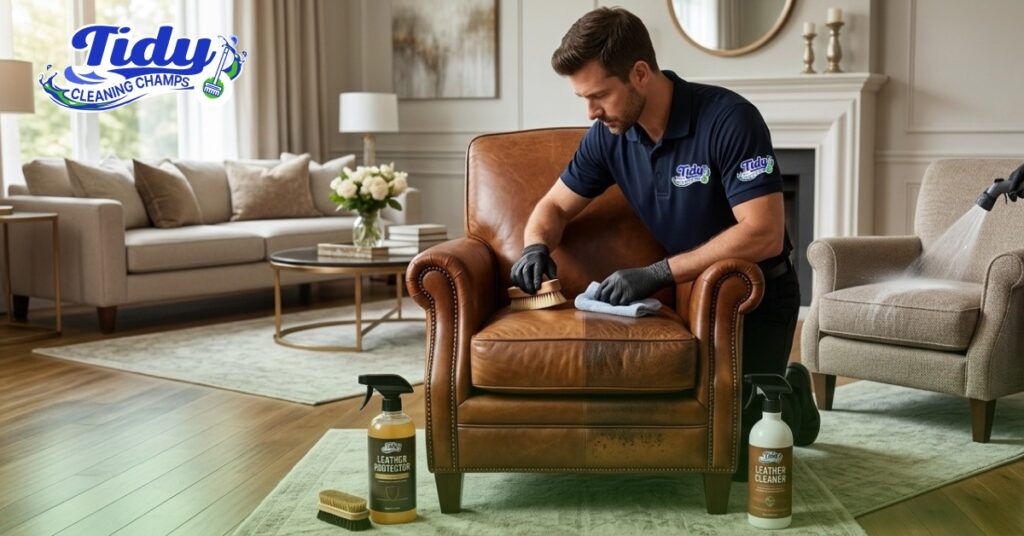
Professional cleaning begins with inspection rather than immediately applying a cleaning solution. The technician should look at the type of leather, surface finish, color, existing scratches, cracking, peeling, stains, and areas of heavy use.
The leather identification step is particularly important. Genuine leather, finished leather, aniline leather, semi-aniline leather, suede, nubuck, and synthetic leather can require different care. Manufacturer instructions and furniture care labels can provide useful information when available.
The next stage is dry soil removal. Loose dust, crumbs, pet hair, and debris are removed using appropriate soft tools. This reduces the chance of rubbing abrasive particles across the leather during the cleaning process.
A compatible leather cleaner is then selected based on the material and condition. The product should be tested in an inconspicuous area before broader application. This helps identify unexpected changes in color, finish, or texture before the entire piece is treated.
After cleaning, the surface is carefully wiped and dried without excessive heat. Conditioning may then be appropriate for certain finished leather furniture. The goal is not simply to make the sofa shiny. Proper care should help preserve the leather’s appearance and flexibility without leaving a heavy or greasy residue.
Why Fabric Cleaning Methods Should Not Automatically Be Used on Leather
Fabric and leather may both be used to cover sofas and chairs, but that does not make their cleaning methods interchangeable. A fabric extraction machine can introduce and remove significant amounts of water, while leather generally requires much more controlled moisture.
Steam is another area where caution matters. High heat and moisture can be inappropriate for some leather finishes and may affect adhesives, stitching, dyes, or protective coatings. Professional cleaners should therefore select their equipment according to the material rather than using one cleaning process for every sofa.
The same principle applies to household products. Bleach, strong detergents, abrasive cleaners, window cleaners, solvents, and other aggressive chemicals can cause permanent changes to leather. Even products that appear harmless can create discoloration or damage when they are incompatible with the furniture’s finish.
If you are uncertain about the correct treatment, it is safer to have the material assessed before experimenting. This is especially important for expensive sofas, antique pieces, delicate leather, heavily damaged furniture, or items with sentimental value.
What Are the Most Common Problems With Leather Furniture?
Leather furniture experiences several types of wear because it is frequently touched and exposed to body oils, food, drinks, sunlight, and everyday friction. The most common problems include surface dirt, grease buildup, stains, scuffs, fading, dryness, cracking, peeling, and discoloration.
Grease and body oils often appear around armrests, headrests, and areas where people sit regularly. These areas may gradually become darker or develop a different sheen from the surrounding leather.
Food and beverage spills require quick attention. Blotting a spill promptly is generally preferable to rubbing it aggressively because rubbing can spread the substance and increase friction against the surface.
Ink stains can be particularly difficult. Some finished leather may tolerate carefully controlled stain treatment, while unfinished or highly absorbent leather can react very differently. Trying a strong solvent without understanding the leather type can turn a small stain into a much larger damaged area.
Scratches are another common concern, particularly in homes with pets. Minor surface scuffs may sometimes be reduced with appropriate leather care, but deep cuts or peeling generally require repair or restoration rather than ordinary cleaning.
Why Conditioning Is Important After Cleaning
Cleaning removes unwanted material from the surface, but leather care does not always end there. Certain types of finished leather benefit from conditioning because repeated use, environmental exposure, and cleaning can affect the material’s softness and appearance.
A suitable leather conditioner can help maintain a supple feel and support the protective condition of the surface. However, conditioning is not universal. Aniline, suede, nubuck, and other specialty leathers may require different products or professional treatment.
Too much conditioner can also create problems. Excess product may leave a greasy surface that attracts dust and changes the appearance of the leather. Professional care focuses on using an appropriate amount and selecting a formulation compatible with the material.
A regular maintenance routine can make professional cleaning easier because dirt and oils are less likely to accumulate heavily. Depending on the furniture and manufacturer’s recommendations, conditioning may be appropriate every several months to once or twice a year.
Leather Furniture Cleaning vs. Commercial Furniture Cleaning
Residential leather sofas are not the only furniture that requires specialized care. Leather chairs, executive seating, reception sofas, waiting room furniture, conference room chairs, and other upholstered pieces are common in commercial environments.
This is where commercial furniture cleaning becomes especially important. Office furniture often experiences much higher daily usage than residential furniture. Employees, customers, visitors, and clients may use the same chairs and sofas repeatedly throughout the day.
High-touch areas can accumulate body oils and dirt quickly. Armrests and headrests may show visible wear before the rest of the furniture does. Regular professional maintenance can help businesses maintain a cleaner and more professional appearance.
Commercial cleaning also needs to consider scheduling. Furniture may need to be serviced outside business hours or in sections so that employees and customers can continue using the facility. A professional cleaning plan should consider the type of furniture, traffic levels, operating hours, and required maintenance frequency.
| Furniture Type | Main Cleaning Concern | Recommended Approach |
| Leather sofa | Oils, dirt, dryness, stains | Leather-specific cleaning and conditioning |
| Fabric sofa | Embedded dust, spills, odors | Upholstery-specific cleaning |
| Office leather chair | Body oils and frequent use | Controlled leather cleaning and maintenance |
| Reception seating | Heavy traffic and visible wear | Routine professional upholstery care |
| Aniline leather | Absorption and staining | Specialist assessment and delicate treatment |
How Can You Protect Leather Furniture Between Professional Cleanings?
Regular maintenance can significantly reduce the amount of heavy cleaning your furniture needs. Start by removing surface dust regularly with a soft, clean cloth. Pay attention to seams, cushion gaps, armrests, and other areas where debris can accumulate.
Spills should be addressed as soon as possible. Instead of aggressively rubbing the affected area, gently blot excess liquid with a clean absorbent cloth. The longer a substance remains on the surface, the greater the chance that it will create discoloration.
Furniture placement also matters. Direct sunlight can contribute to fading and drying, while strong heat sources can affect leather over time. Keeping furniture away from direct sunlight and heating vents can help reduce unnecessary environmental stress. The American Leather Chemists Association also provides professional resources related to leather materials and care.
Pets can also create additional wear. Claws can scratch leather, while oils and dirt from pets can accumulate on frequently used areas. Protective throws can help in some situations, but they should not replace regular inspection and cleaning.
For ongoing maintenance questions or professional service needs, you can Contact us to discuss your furniture and determine the most appropriate cleaning approach.
What Should You Never Use on Leather Furniture?
Some cleaning mistakes can be more damaging than the original stain. Harsh household cleaners, bleach, abrasive products, nail polish remover, and strong solvents should not be used on leather unless a qualified professional specifically recommends them for that particular material.
Excessive water is another common mistake. Leather should not be soaked in an attempt to remove dirt. Too much moisture can create uneven drying, water marks, or other surface problems.
Household oils can also be problematic. A product that makes leather appear shiny temporarily may not be designed for furniture leather and could leave a residue or affect the finish. Always choose products intended for the specific type of leather.
Before using any new product, test it in a hidden area. If the color, texture, or finish changes, stop immediately rather than continuing across the entire piece.
When Should You Hire a Professional Leather Cleaner?
Professional assistance makes sense when the furniture has stubborn stains, extensive dirt buildup, visible cracking, discoloration, peeling, or a delicate leather finish. It is also a sensible option for expensive furniture where an incorrect DIY treatment could create a costly repair.
Professional cleaners can evaluate the material before deciding what should and should not be done. This assessment is particularly valuable for antique furniture, aniline leather, specialty finishes, and furniture that has already been treated with multiple household products.
A professional service can also provide a more consistent result across a large sofa or sectional. Spot cleaning only one section can sometimes create visible differences in color or sheen. Treating the furniture systematically can produce a more uniform appearance.
If you are comparing cleaning providers, ask whether the company identifies the leather type, tests products before treatment, explains the process, and uses products designed specifically for leather furniture.
How Often Should Leather Furniture Be Cleaned?
There is no single schedule that works for every leather sofa. A lightly used sofa in a low-traffic room may require less frequent professional attention than furniture used every day by children, pets, customers, or office employees.
Regular dusting can be performed weekly, while spills should be addressed immediately. Conditioning frequency depends on the type and finish of leather, the manufacturer’s instructions, environmental conditions, and how heavily the furniture is used.
Professional cleaning may be appropriate when visible buildup develops or when routine maintenance is no longer enough. Businesses with high-traffic furniture may benefit from a scheduled maintenance program rather than waiting until the furniture looks heavily soiled.
The most important principle is consistency. Small amounts of routine care are usually easier to manage than waiting until dirt, stains, dryness, and wear become severe.
What Questions Should You Ask Before Hiring a Leather Cleaning Company?
Before booking a service, ask what type of leather the company works with and how the technician determines the appropriate cleaning method. A knowledgeable provider should understand that finished leather and delicate unfinished leather cannot automatically receive the same treatment.
Ask whether the company performs a spot test and whether the cleaning process includes conditioning when appropriate. You should also ask how the company handles stains, scratches, cracking, and other existing damage.
It is also useful to clarify what results are realistic. Professional cleaning can remove surface dirt and improve the appearance of many stains, but it cannot always reverse permanent dye damage, deep scratches, severe cracking, or structural deterioration.
Clear communication protects both the customer and the furniture. A reliable cleaning provider should explain what can be treated, what may remain visible, and whether restoration rather than cleaning is necessary.
Frequently Asked Questions About Leather Furniture Cleaning
Can I clean leather furniture with a regular upholstery cleaner?
Regular upholstery cleaner should not automatically be used on leather. Upholstery products are often formulated for textile fibers, while leather requires products compatible with its specific finish. Always check the furniture manufacturer’s care instructions and use a leather-specific product when appropriate.
Is professional leather furniture cleaning worth it?
Professional cleaning can be worthwhile when furniture has difficult stains, heavy soil, delicate leather, visible damage, or significant value. A professional can identify the material and select a suitable cleaning method, reducing the risk of damage caused by an incompatible product.
How often should leather furniture be conditioned?
Conditioning frequency depends on the type of leather, usage, environment, and manufacturer recommendations. Many finished leather pieces may benefit from conditioning every six to twelve months, while specialty leather can require a different approach.
Can leather furniture be steam cleaned?
Steam should not be treated as a universal cleaning method for leather. Heat and moisture can be unsuitable for certain leather finishes and furniture construction. Before using steam, verify the manufacturer’s instructions or consult a leather-care professional.
What is the best way to remove a spill from leather furniture?
The first step is to address the spill quickly. Gently blot excess liquid with a clean, absorbent cloth rather than rubbing the surface. For anything beyond a simple spill, use a cleaning product specifically approved for the leather type or seek professional advice.
The Best Approach to Long-Term Leather Furniture Care
Leather furniture can remain attractive and comfortable for many years when it receives the right type of care. The key is understanding that leather is not simply another form of upholstery. Its surface, finish, moisture balance, and response to chemicals require a more controlled approach.
Routine dusting, prompt spill treatment, sensible furniture placement, and appropriate conditioning can reduce everyday wear. When deeper cleaning is needed, professional assessment becomes especially valuable because the correct method depends on the type and condition of the leather.
Whether the furniture is in a family living room, executive office, hotel, reception area, or commercial environment, proper care can help maintain its appearance and extend its useful life. Choosing a cleaning provider that understands the difference between leather and fabric is an important part of that process.
For professional furniture care and specialized upholstery cleaning, Tidy Cleaning Champs can help you choose an appropriate cleaning approach for your furniture. When leather requires more than routine dusting or simple maintenance, a careful professional process can help refresh its appearance while reducing the risk of unnecessary damage.
You can explore leather furniture cleaning service options based on the condition, type, and usage of your furniture. With the right cleaning method and ongoing care, leather can continue to provide the comfort, appearance, and durability that make it such a popular furniture material.