

When it comes to maintaining a space, the word “clean” has two entirely different meanings depending on whether you are standing in a living room or a corporate lobby. While both involve removing dirt, the operational protocols, chemical grades, and legal liabilities couldn’t be further apart.
At Tidy Cleaning Champs, we’ve seen how choosing the wrong service type can lead to either wasted household budgets or dangerous commercial compliance gaps. In this guide, we break down the high-level differences in equipment, production rates, and standards to help you choose the right partner for your facility.
1. Scope of Work: Detail vs. Systematic Volume
The primary difference lies in the intent of the clean.
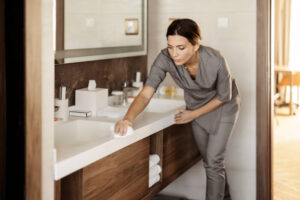
- Residential Cleaning is “Personalized.” It focuses on the aesthetic comfort of a home. This includes detailed tasks like making beds, folding laundry, cleaning inside ovens, and wiping down personal decor. It is high-touch and highly variable based on a family’s lifestyle.
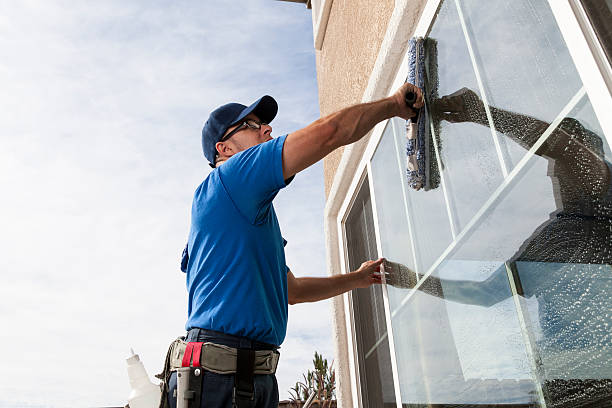
- Commercial Cleaning is “Systematized.” It focuses on health, safety, and operational continuity. In a 20,000-square-foot office, a cleaner isn’t dusting family photos; they are disinfecting high-touch points (elevator buttons, door handles), maintaining industrial flooring, and ensuring restrooms meet high-traffic sanitation codes.
2. Production Rates: The Math Behind the Clean
One of the most overlooked aspects of the Commercial vs. Residential debate is the “Production Rate”. The square footage is cleaned per hour. This is where professional commercial teams separate themselves.
| Feature | Residential Cleaning | Commercial Cleaning |
| Production Rate | 700 – 1,000 sq. ft. / hr | 2,500 – 4,000+ sq. ft. / hr |
| Primary Goal | Aesthetic & Comfort | Health, Safety & ROI |
| Staffing | Individual or Small Teams | Multi-person Crews / Shift Leads |
| Key Metric | Client “Feel” & Detail | Square Footage & Compliance |
Why the gap? Commercial cleaners use Zone Cleaning or Team Cleaning methods, utilizing industrial-grade equipment like auto-scrubbers and backpack HEPA vacuums that allow them to cover massive areas with 99.9% disinfection accuracy in a fraction of the time.
3. Industrial-Grade Equipment vs. Household Tools
You wouldn’t use a garden hose to put out a skyscraper fire. Similarly, residential tools are not built for commercial rigors.
- Chemicals: Residential cleaners often use “Consumer Grade” products (like Windex or Mr. Clean). Commercial cleaners use EPA-registered hospital-grade disinfectants. These require specific Safety Data Sheets (SDS) to be kept on-site to comply with OSHA Hazard Communication Standards.
- Filtration: While a home vacuum might look clean, Tidy Cleaning Champs utilizes industrial HEPA-filter vacuums that capture particles as small as 0.3 microns, essential for improving Indoor Air Quality (IAQ) in high-traffic offices.
4. Liability, Insurance, and Risk Management
This is the “Hidden” difference that protects your assets.
- Residential: Many independent cleaners carry basic or no insurance. While fine for a spilled bottle of cleaner on a rug, it’s a massive risk for a business.
- Commercial: A true commercial provider like Tidy Cleaning Champs carries comprehensive General Liability, Workers’ Comp, and Janitorial Bonding. For commercial clients, we provide a Certificate of Insurance (COI). This protects the business owner from “slip and fall” lawsuits and property damage that could bankrupt a small firm.
5. Compliance: Meeting the “Standard”
In a home, the standard is your personal satisfaction. In a business, the standard is set by law.
- Healthcare/Medical: Must follow HIPAA and Bloodborne Pathogen protocols.
- Food Service: Must meet Health Department and NSF sanitization codes.
- Corporate: Must follow OSHA safety guidelines to ensure a “Right to a Safe Workplace” for employees.
Which Service Do You Need?
Choose Residential Cleaning if:
- You need help with a house, condo, or apartment.
- You want personal tasks like laundry or dishwashing included.
- You prefer a cleaner who visits during your workday.
Choose Commercial Cleaning if:
- You manage an office, retail space, warehouse, or clinic.
- You need a “Service Level Agreement” (SLA) with guaranteed results.
- You require after-hours cleaning (Nights/Weekends) to avoid disrupting staff.
- You need to document cleaning for insurance or compliance audits.
FAQs
1. What is the difference between commercial and residential cleaning?
The main difference is the environment and equipment used. Residential cleaning involves personalized tasks like laundry and detail-cleaning for homes. Commercial cleaning involves heavy-duty disinfection, industrial-grade machinery, and strict adherence to health and safety regulations (like OSHA) for businesses and large facilities.
2. Is commercial cleaning more expensive than residential?
Commercial cleaning usually has a higher total cost but a lower price-per-square-foot. This is because commercial jobs require higher liability insurance, industrial equipment, and specialized chemicals. However, because commercial crews use high-speed “production rates,” they can clean thousands of square feet much faster than a residential cleaner.
3. Can a house cleaner clean an office?
While a house cleaner can perform basic tidying, they often lack the industrial-grade vacuums, EPA-registered disinfectants, and SDS (Safety Data Sheet) training required for commercial compliance. For offices, it is safer to hire a commercial janitorial service that is bonded and insured for business-scale risks.
4. When do commercial cleaners typically work?
Unlike residential cleaners who work during the day, commercial cleaners typically work after-hours (nights and weekends). This prevents disruption to business operations, ensuring the facility is sanitized and ready for employees the following morning without interrupting meetings or customer service.
5. What are cleaning production rates?
Cleaning production rates measure the square footage cleaned per hour. A residential cleaner typically covers 700–1,000 sq. ft. per hour due to detailed tasks. A commercial cleaning crew is much faster, averaging 2,500–4,000+ sq. ft. per hour by using specialized team cleaning methods and industrial tools.
Why Tidy Cleaning Champs is the Hybrid Expert
Whether you are a homeowner looking for a sanctuary or a business owner looking for a liability-free facility, the choice of partner matters. We bridge the gap by bringing commercial-grade precision to every environment we touch.